Out-earn your boss. Without quitting.
By subscribing, you also join my Unplugged newsletter on Substack.
Every promotion makes you less free. Here's why, and the one number that tells you how many people it takes to match your boss's salary. In short: a salary is designed to keep you, not to free you. The 9 quiet laws below explain why every promotion makes you less free, and how to work out your out-earn number: your boss's yearly salary divided by 12, divided by $5. That is how many people paying you $5 a month it takes to match your boss. Prefer to watch? Watch the video version, with all the drawings, on YouTube Look at your boss. Really look at them. More money than you. A bigger title. Ten years ahead of you, on the same ladder. And still on their phone at their kid's birthday party. Still asking someone above them for permission to take a vacation. That's not the person you're trying to beat. That's you in ten years, if you keep climbing. I know, because I climbed that ladder for twenty years. More than twenty years at one of the biggest telcos, doing products, sales and marketing. And the higher I got, the less of my life was mine. Then I built a six-figure paid newsletter on the side of that job, in two hours a day. And no, I didn't quit. The job paid for every experiment that failed and every month the newsletter made nothing. I'm not more disciplined than you. I just climbed high enough to see what's at the top. So here are the nine laws the people who out-earn their boss follow quietly. None of them is "quit." Every one of them is about the ladder you're standing on right now. And at the end, we'll work out one number together. Law 1: Every promotion is a longer leash
Almost everyone with a job is raised on the same belief. Climb, and one day you'll be free. Get the promotion. Then the next one. Then you can breathe. Not really... Look at what a promotion actually changes. More money, yes. Then more people under you. More meetings. A laptop that comes on vacation. A phone that buzzes on Sunday. More to lose if you leave, so you're more scared to leave. The company doesn't pay you more for nothing. It pays you more to own more of you. Thoreau wrote it in Walden, in 1854: the cost of a thing is the amount of life you exchange for it. Not money. Life. So here's the math nobody does at the promotion party. Take your new salary and divide it by the hours you'll really work. Not the hours in the contract. Include the evenings, the Sunday emails, the hours you spend thinking about work in the shower. For a lot of people the raise works out to less per hour of life than before. The leash gets longer, so it feels like freedom. It's still a leash. Before you say yes to the next step up, ask one question: what will this own of me that I'm not getting paid for? Law 2: Your salary isn't real
Most people believe their salary is what they're worth. The company looked at you, measured you, and wrote down your number. It didn't. Your salary is a number built to do two jobs at the same time. Keep you motivated. And keep you hungry for more. Big enough that you won't leave. Small enough that you can never stop. Think about your last raise. How long did it feel like a raise? A month? Three? Then your life grew into it. A slightly better car. A slightly bigger apartment. And now you need the next raise just to feel the way the last one felt. That's the design. Nassim Taleb, the writer behind The Black Swan, called a monthly salary one of the three most harmful addictions (next to heroin and carbohydrates). He was half joking. Only half. Here's why I see it so clearly. I spent fifteen years of my career designing subscriptions. Figuring out exactly what keeps people paying and what stops them from leaving. And one day I realized a salary works the same way. It's a retention product. And I was the customer. So stop treating your salary like a measure of your worth. It's a tool built to keep you. You can use it. Just don't believe it. Law 3: Stop over-delivering for a company that will replace you in two weeksGive 120%, and someone will notice. Stay late, answer at midnight, take the extra project. It'll pay off. Look. If you left tomorrow, how long would it take them to post your job? A week? Two? The job description already exists. It's sitting in a folder. Now count the extra hours you gave last month, above what you're paid for. Five? Ten? Twenty? Multiply by twelve. That's a part-time job you work every year for free. And here's the part that hurts. That extra 20% isn't your worst energy. It's your best. The ideas, the focus, the hours when you're actually sharp. You're giving away the exact energy you'd need to build something of your own. Do the job well. Do it 100%. You're paid for that, and you should be good at it. The extra 20 is yours. Stop donating it. Law 4: Invest in yourself, not in the companyMost people think they're already investing in themselves, because they're getting better at their job. They know every system. Every process. Who to call. But ask yourself: which of those skills would anyone pay you for the day you leave? The internal software? The politics? Knowing which VP likes long emails? They're worth a lot inside the building and almost nothing outside it. There are two kinds of skills. Skills the company needs, which die the day you leave. And skills you own: selling, writing, pricing, explaining, getting a stranger to trust you. Those follow you everywhere. Naval Ravikant said it in 2018: you're not going to get rich renting out your time. A salary is renting out your time. So do this audit. Take the four things you gave the company this week: time, effort, energy and skills. How much of each went into something that's still yours if they let you go on Friday? For most people it's close to zero. Put your time, effort, energy and skills into things you own. Do your job. But every week, some of the best of you has to go into you. Law 5: Take their know-how, don't build their business with yours
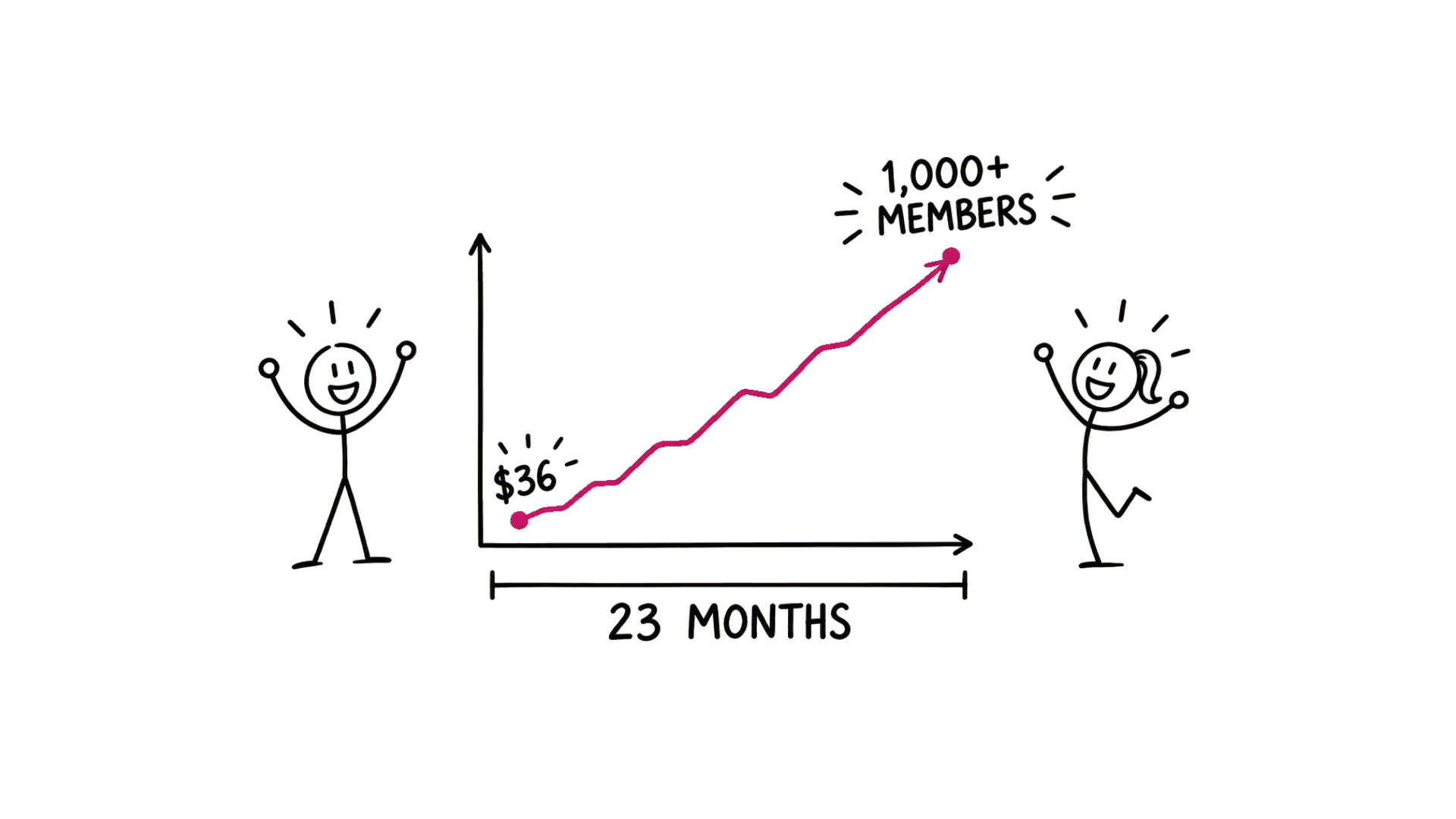
The belief here is that the job is a cage. Everything you learn there belongs to them. Flip it. Your job is the best paid school you'll ever go to. They pay you to learn. They let you test on their budget. They let you fail with their money. Most people sit in that school for twenty years and never take one lesson home. I spent fifteen years building and selling subscriptions for big companies. Millions of customers. I learned how people decide to pay, why they stay and why they leave. So when I started my newsletter on the side, I didn't start from zero. I took the same playbook and ran it for myself. In 23 months the newsletter went from my first $36 to more than 1,000 paying members. Same skills. Different owner. Now the line, because it matters. I'm talking about know-how. What you learn, how you think, your skills. Never their data, their clients, their secrets. You take what's in your head, and that was always yours. Tomorrow, ask: what am I learning here that a stranger would pay for? That's your curriculum. Learn it on purpose. Law 6: Your boss's job is a ceiling, not a goalMost people with a job have a plan they never say out loud: get my boss's job. Then the next one. So here's a hard question. Do you want their life? Not their salary. Their life. Their Sunday. Their evenings. Their calendar. Who they answer to. How often they see their family. If the answer is no, why are you climbing toward it? In 1969 Laurence Peter wrote that in a hierarchy, every employee tends to rise to their level of incompetence. People laughed. Then they recognized their managers. But there's a second half nobody says out loud. You also rise to the level where your life stops being yours. Your boss is a preview. Every day they show you exactly what the top of your ladder looks like. Your boss's job is the ceiling of a ladder someone else built. People who out-earn their boss don't climb past them. They step off onto a ladder of their own. Law 7: A raise needs permission, an audience doesn't
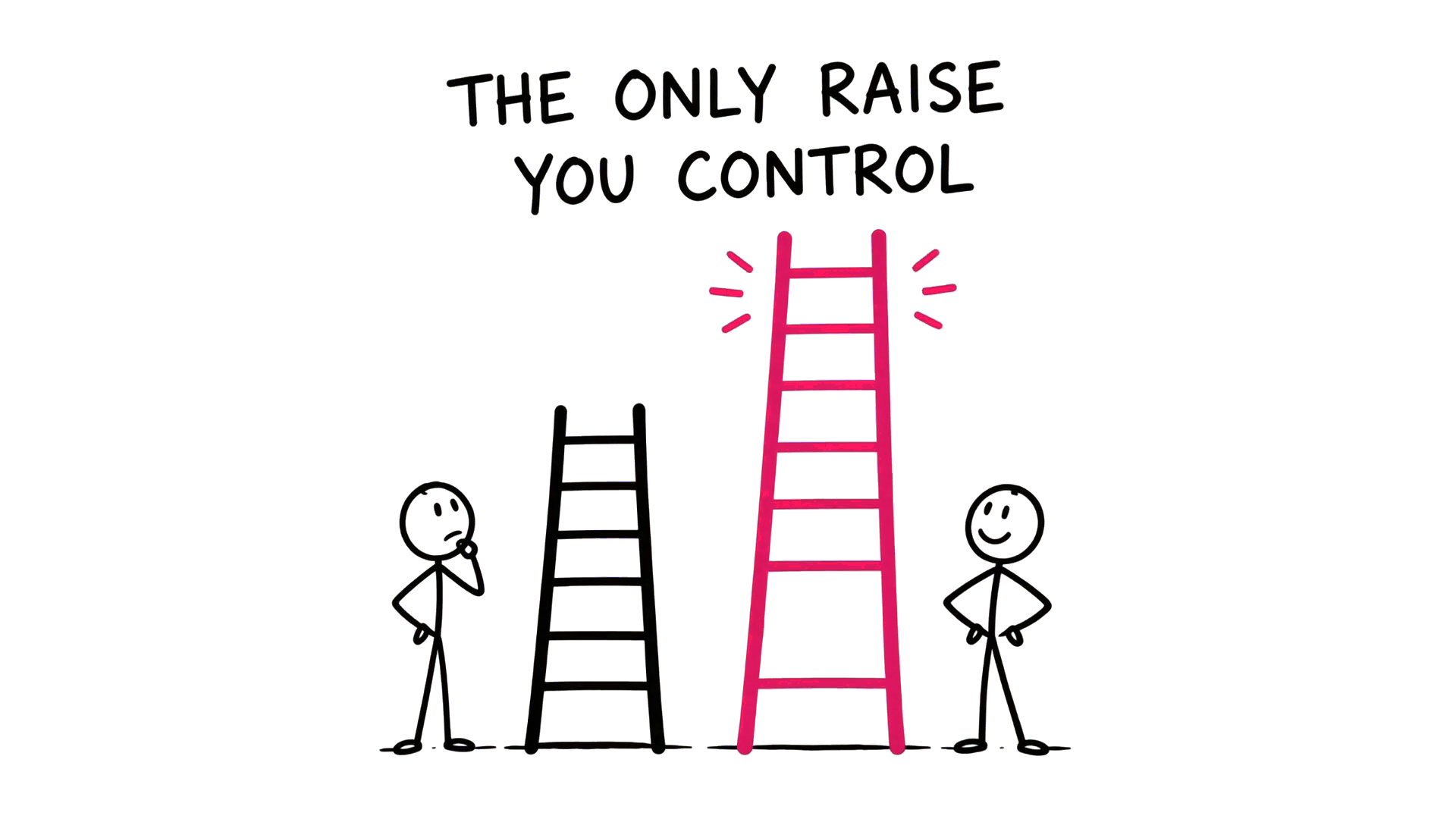
If I want to earn more, I have to ask. Ask for the raise. Ask for the promotion. Ask, and wait. Think about who decides your raise. Your boss. Their boss. A budget set in a meeting you weren't in. And then they tell you it was a great year, and here's three percent. Now the alternative. People who know you, trust you and pay you directly. Ten people paying you $5 a month. A hundred. A thousand. Nobody approves it. Nobody caps it. Nobody takes it away in a restructuring. An audience you own is the only raise you control. And I mean own. Not followers on an app that can bury you tomorrow. A list. Emails. People who said yes to hearing from you. When I started, nobody around me even knew what Substack was. My partner didn't know for months. He just saw me typing in the evenings and left me alone. Today more than 1,400 people pay me. I never asked anyone for that raise. Stop waiting for permission to earn more. Start building the one raise nobody can approve or deny. Law 8: The day you don't need the raise, you start getting themThis one sounds backwards. Stay with me. When your salary is your only income, you negotiate scared. You take the extra project because you can't afford to say no. You accept the three percent because the alternative is a resume and a job search. Every decision has the rent attached to it. Now imagine a second income. Even a small one. You stop flinching. You say no to the project that eats your weekends. You ask for what you're worth, and you mean it, because you can walk away. And bosses can feel that. They start treating you like someone they could lose. Desperate money makes bad decisions. Calm money makes good ones. I didn't make that up because it sounds nice. I watched it happen to me. Build the second income, and the first one starts to change too. Your out-earn number (do this now)
Get a piece of paper. This takes one minute.
That's your out-earn number. The number of people paying you $5 a month it takes to match your boss's salary. Now look at it. It's not a million. It's not even a hundred thousand. It's a number of people that could fit in a theater. And you don't need it next month. You need it in a few years, built two hours a day, on the side of the job that's paying your rent while you do it. A promotion is a maybe. A raise is a maybe. This is a count. You can watch it go up. Want to start your count? I made a free masterclass where I show you the whole system I used, with my real numbers on screen.
Law 9: You will never be free on a salaryI promised you the moment I knew. It wasn't a dramatic day. Nobody fired me. Nobody yelled. It was a quiet thought I couldn't unthink. I was good at my job, I was paid well, and I still needed the next raise to feel the way the last one felt. And I knew the one after that would do the same. You will never be free on a salary. Not because your job is bad. Because a salary is built to keep you. That's its whole job. A few months later, I started writing. Quietly, before work, on a platform nobody around me had heard of. Two hours a day. No announcement. No resignation letter. I kept the job, and I let it pay for everything while I built the one thing it could never own. You don't escape a salary by quitting it. You escape it by building something it doesn't control. TLDR: the two ladders
The ladder you're standing on:
The other ladder:
Your boss isn't the person you need to beat. The ladder is. And an audience you own is the only raise you control. Write back and tell me your out-earn number. I read every reply.
Yana
Copyright © CREATIVETECH, Inc. All Rights Reserved. 228 Park Ave S PMB 84867, New York, NY 10003 Unsubscribe from these emails or Unsubscribe from all emails from CREATIVETECH and Yana G.Y. |





Out-earn your boss. Without quitting.
By subscribing, you also join my Unplugged newsletter on Substack.